
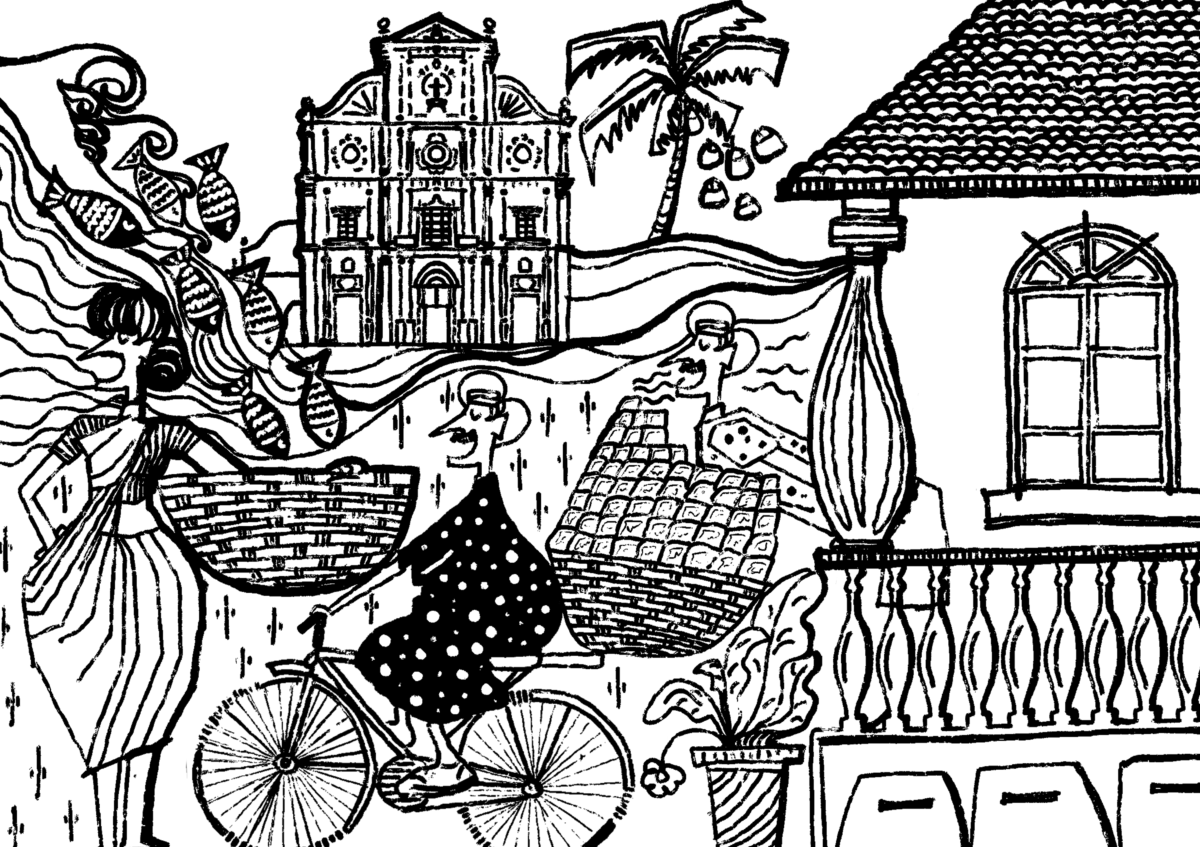
You know you have arrived in Goa the moment you step out of Madgaon station and find a yellow-black auto rickshaw waiting with both its doors flung open like wings. From there, the road runs to Kadamba bus stand, where the state buses sit low and battered and utterly unbothered, painted in the mixed colours that Goa seems to favour for everything it wants you to notice.
The real threshold, though, is the drive north, over the Zuari bridge, the Mandovi opening on either side, the wind arriving off the water before you’ve had time to prepare for it. It hits you the way weather is supposed to hit you: full in the face, salted, warm even when it is raining. Somewhere in that crossing, between one bank and the other, the ordinary rules of an Indian coastal town start to bend into something else, half remembered from Lisbon, and rest invented on the spot.
Goa announces itself first through food, and food here is inseparable from its architecture of habit. A kokum soda arrives sweating in its glass before you’ve asked for one. Paav is delivered each morning by a breadman on a bicycle, announced by a horn instead of a knock, a small ritual descended directly from the Portuguese habit of the daily loaf. Chicken poee cutlets, crispy rava fried chicken inside hollow crusty bread and fish thali plates heaped with rice and coconut fish curry in kokum, and always, somewhere close, the sharp clean sting of feni, all of it eaten in the shadow of buildings that are doing their own quiet storytelling.
Leave a Reply